 SJVAir Toolkit
Timelapse Videos
timelapse create
Render a sequence of historical map frames across a time range and assemble them into a video or GIF via ffmpeg (must be installed and on PATH). Requires pip install sjvair[maps]. Shares the same --region/--county/--city/--zip/--tract/--urban/--buffer/--bbox/--scope/--location area and filter options as map create.
Output format is inferred from the --output extension: .gif produces an animated GIF (via a two-pass palettegen/paletteuse filter for reasonable quality); anything else is encoded as H.264 in whatever container the extension implies (.mp4 is typical). GIFs have no real inter-frame compression, so file size scales roughly with --width * --height * frame count — a full-resolution, long-duration GIF can easily run into the hundreds of megabytes. The CLI prints a warning when that’s likely, but sizing it down (smaller --width/--height, a longer --interval) or sticking with .mp4 is left to you.
# One frame every 5 minutes across the evening of the 4th
sjvair --tz America/Los_Angeles timelapse create \
  --type pm25 \
  --urban Fresno \
  --start "2026-07-04 20:00:00" \
  --end "2026-07-05 02:00:00" \
  --interval 5m \
  --output fresno-fireworks.mp4
# One frame every 5 minutes across the evening of the 4th
sjvair --tz America/Los_Angeles timelapse create `
  --type pm25 `
  --urban Fresno `
  --start "2026-07-04 20:00:00" `
  --end "2026-07-05 02:00:00" `
  --interval 5m `
  --output fresno-fireworks.mp4
Frames are written as numbered PNGs to --frames-dir (defaults to <output>.frames/) and encoded at --fps (default 24). Re-running the same command skips any frame already on disk — an interrupted run picks up where it left off without re-fetching data:
sjvair --tz America/Los_Angeles timelapse create \
  --type pm25 \
  --urban Fresno \
  --start "2026-07-04 20:00:00" \
  --end "2026-07-05 02:00:00" \
  --interval 5m \
  --frames-dir frames/fresno-2026-07-04 \
  --output fresno-fireworks.mp4
sjvair --tz America/Los_Angeles timelapse create `
  --type pm25 `
  --urban Fresno `
  --start "2026-07-04 20:00:00" `
  --end "2026-07-05 02:00:00" `
  --interval 5m `
  --frames-dir frames/fresno-2026-07-04 `
  --output fresno-fireworks.mp4
By default frames render one at a time. Pass --workers N to render up to N frames concurrently — each worker is a separate process (not a thread; matplotlib rendering isn’t thread-safe), so this speeds up the actual bottleneck for long timelapses — per-frame basemap-tile fetching and rendering — not the monitor-data API calls, which are already fast:
sjvair --tz America/Los_Angeles timelapse create \
  --type pm25 \
  --urban Fresno \
  --start "2026-07-04 20:00:00" \
  --end "2026-07-05 02:00:00" \
  --interval 5m \
  --workers 4 \
  --output fresno-fireworks.mp4
sjvair --tz America/Los_Angeles timelapse create `
  --type pm25 `
  --urban Fresno `
  --start "2026-07-04 20:00:00" `
  --end "2026-07-05 02:00:00" `
  --interval 5m `
  --workers 4 `
  --output fresno-fireworks.mp4
Example: Fresno (MP4)
A full 24 hours across the 4th of July, over the Fresno urban area, outdoor monitors only, in 5-minute increments — watch the fireworks show up as a wave of Moderate/Unhealthy readings through the evening that clears out by morning:
sjvair --tz America/Los_Angeles timelapse create \
  --type pm25 \
  --urban Fresno \
  --start "2026-07-04 12:00:00" \
  --end "2026-07-05 12:00:00" \
  --interval 5m \
  --location outside \
  --output fresno-fireworks-2026-07-04.mp4
sjvair --tz America/Los_Angeles timelapse create `
  --type pm25 `
  --urban Fresno `
  --start "2026-07-04 12:00:00" `
  --end "2026-07-05 12:00:00" `
  --interval 5m `
  --location outside `
  --output fresno-fireworks-2026-07-04.mp4
Example: Hanford (GIF)
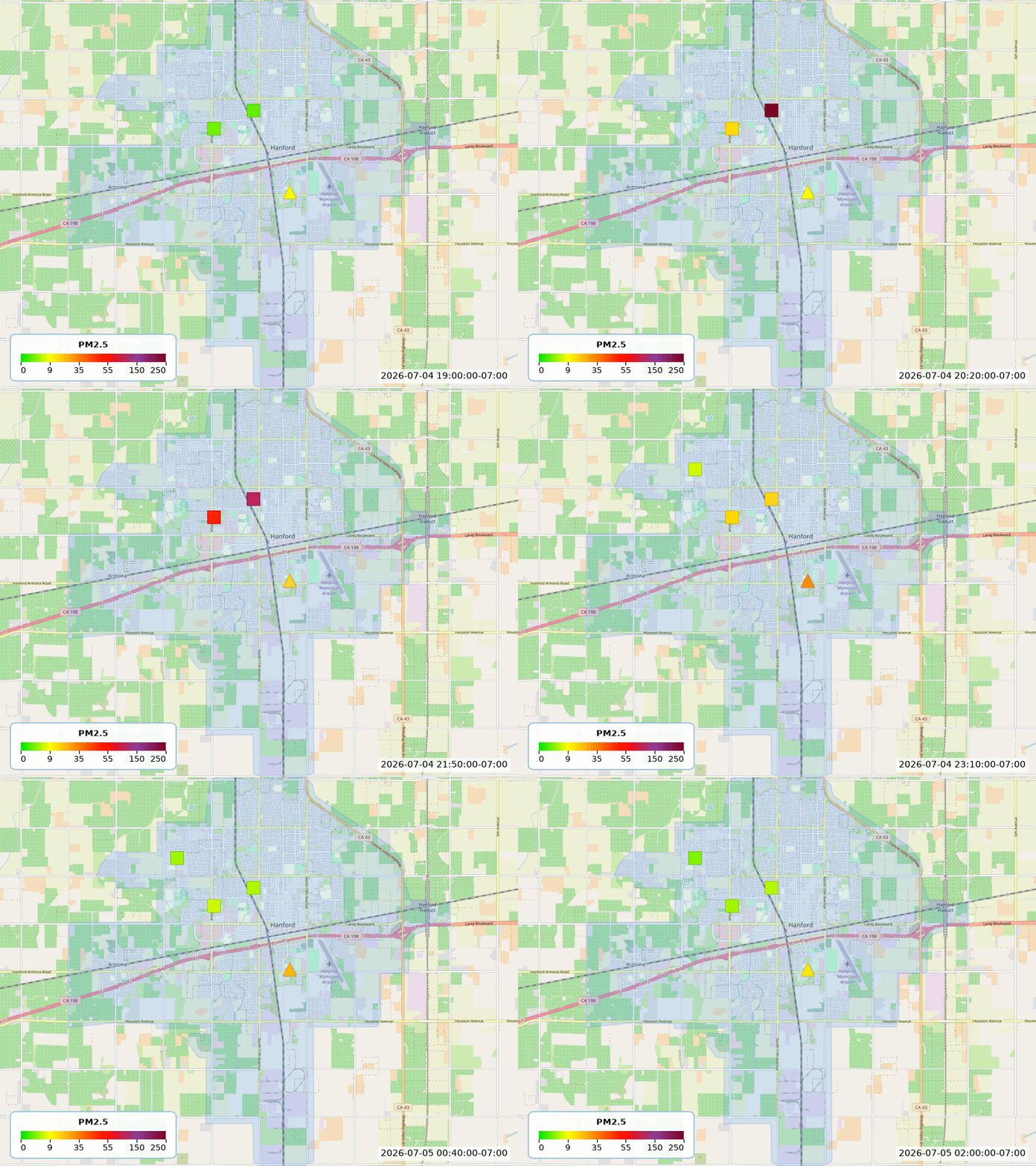
A tighter window over Hanford — 7pm to 2am on the 4th, in 10-minute increments — shows the same pattern on a smaller community: PM2.5 climbs from Good/Moderate readings into Unhealthy for Sensitive Groups territory as fireworks smoke settles over the city around 9-10pm, then clears out overnight. A lower --fps, coarser --interval, and smaller --width/--height keep the GIF a reasonable size (under 300KB here) — a full-resolution, 5-minute-interval GIF over the same window would be many times larger, since GIF has no real inter-frame compression:
# --urban Hanford is ambiguous (also matches Waterford); use --region instead
sjvair --tz America/Los_Angeles timelapse create \
  --type pm25 \
  --region zvnca \
  --start "2026-07-04 19:00:00" \
  --end "2026-07-05 02:00:00" \
  --interval 10m \
  --fps 10 \
  --width 800 \
  --height 600 \
  --output hanford-fireworks-2026-07-04.gif
# --urban Hanford is ambiguous (also matches Waterford); use --region instead
sjvair --tz America/Los_Angeles timelapse create `
  --type pm25 `
  --region zvnca `
  --start "2026-07-04 19:00:00" `
  --end "2026-07-05 02:00:00" `
  --interval 10m `
  --fps 10 `
  --width 800 `
  --height 600 `
  --output hanford-fireworks-2026-07-04.gif